Deadly flood hits Nepal-Tibet border, hundreds unaccounted for / Photo: Prakash MATHEMA - AFP

Massive flooding near the border with Tibet killed at least 19 people in Nepal on Wednesday, but hundreds of tourists were still out of contact hours after the disaster hit.
A torrent of mud and debris burst from the banks of a river between China and Nepal, burying buildings and triggering a frantic search for survivors.
Chinese state media reported "major casualties" from a mudslide at a Tibet trade hub on China's side of its border with Nepal, and President Xi Jinping ordered an "all-out" rescue effort.
"I got a call from (my brother-in-law) this morning, and they were crying and said their entire house had been swept away. Three family members were rescued, but his brother is still missing," said 56-year-old Raju Bhadel.
Police in Nepal reported the death toll hit at least 19, but 384 tourists -- 291 of them foreigners -- were unaccounted for over eight hours after the disaster struck.
Nepal's tourism board, which released the figure, said Americans, Indians, an Australian, Malaysians and Britons were among those unaccounted for.
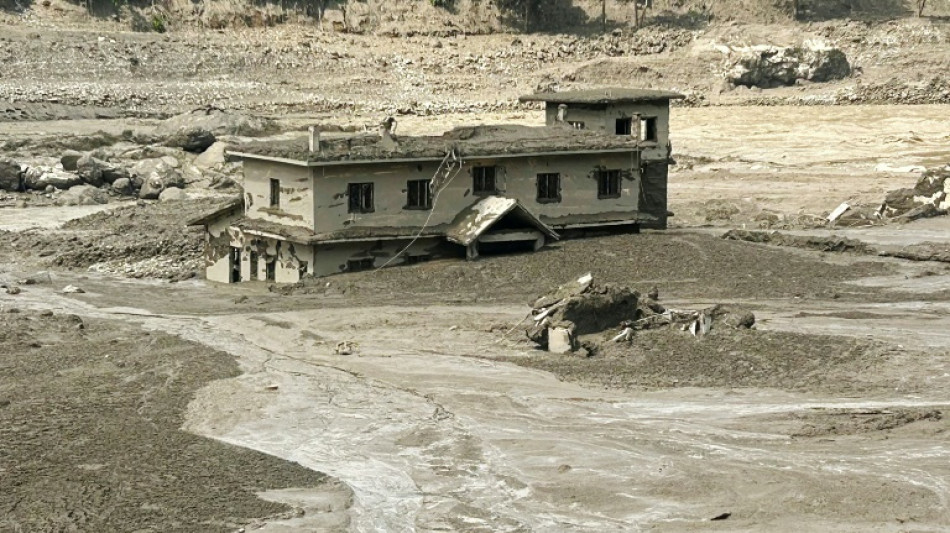
Images shared by Nepali police showed floodwater surging through a river, sweeping away houses in its path, while AFP images depicted the top floor of a house sticking out from muddy soil.
A police spokesman told AFP earlier that authorities did not know the extent of the damage but said they had "alerted people who are staying near the riverside to relocate".
The Nepal Army said it had deployed helicopters and disaster response personnel to the affected area.
The Nepal Electricity Authority said about 430 megawatts of production capacity, including from hydropower and solar facilities, has been damaged.
"The disaster has damaged the production, transmission and distribution facilities of the Authority... resulting in disruption of electricity supply," it said.
Sarthak Shrestha, a remote sensing and geo information analyst at the Kathmandu-based International Centre for Integrated Mountain Development (ICIMOD), said a preliminary assessment showed "no anomalies" from China's side of the border.
"We believe a rock-ice avalanche occurred in Nepal, blocking the Lhende river and causing the cascading flood event," he told AFP.
- Mudslide risk -
Several highways were also closed, Nepali authorities said.
Chinese state broadcaster CCTV reported on Wednesday that "a mudslide disaster on the Nepalese side resulted in major casualties and missing people at the Gyirong Port" in Tibet.
Footage shared by the broadcaster, which AFP was unable to immediately verify, showed rushing water carrying tree branches and debris, as well as a flooded road.
China's leader said that "the most urgent task is doing everything possible to search for and rescue the missing people... quickly treat injured people and minimise casualties to the greatest extent possible", according to CCTV.
Traffic authorities in Tibet's Shigatse said roads in the area were "at risk of mudslides and unsafe for passage" in a post to social media on Wednesday.
In July last year, 17 people went missing after a mudslide near the Gyirong Port, Xinhua reported at the time.
Monsoon rains from June to September regularly trigger deadly floods and landslides across South Asia.
Scientists say climate change is increasing the frequency and intensity of extreme weather events in the region.
Qianggong Zhang, head of climate and environmental risks at ICIMOD, said a second flood may be imminent.
"With a blockage still lodged upstream on the Nepal-China border river, authorities warn a second flood may occur," he told AFP.
Z.Vega--GM