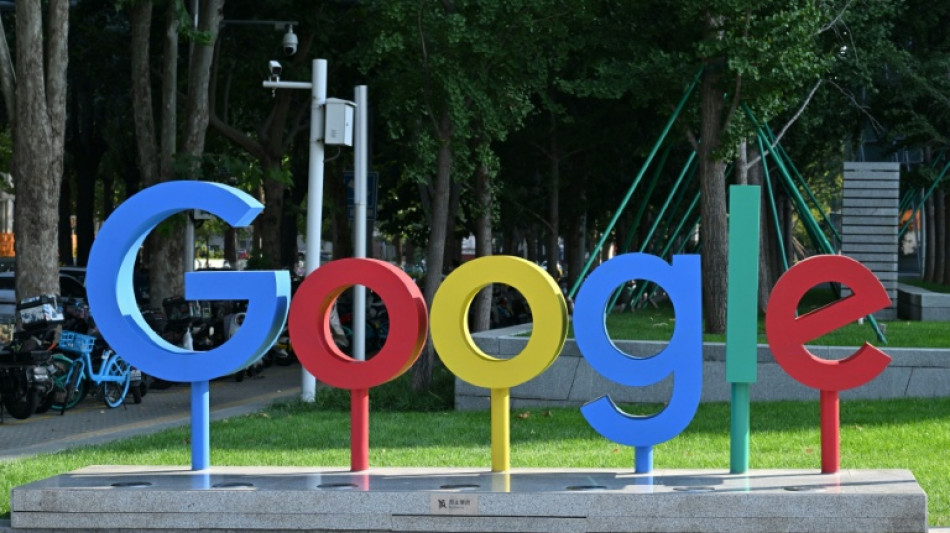
Google restricts access to new AI model over safety concerns / Photo: ADEK BERRY - AFP

Google on Wednesday said it would withhold its most powerful artificial intelligence model from the public for now, releasing Gemini 4 Argon only to a vetted group of cybersecurity experts to avoid misuse by hackers.
"Safely releasing frontier capabilities at this level requires a phased approach," wrote Koray Kavukcuoglu, Google's chief AI architect, in a blog post announcing the model.
Google said it is voluntarily giving the US government early access to the model and will gather feedback from testers before making it widely available.
The cautious rollout mirrors the approach of rival Anthropic, which has kept its most advanced model, Claude Mythos Preview, restricted to a small number of trusted organizations.
Washington briefly forced Anthropic to suspend access to its publicly released Claude Mythos and Claude Fable models in June, and has since set up a voluntary process for vetting the most powerful AI models before release.
The announcement came a day after President Donald Trump hosted top tech executives, including Google chief Sundar Pichai and Anthropic's Dario Amodei, at the White House, where they signed a voluntary accord pledging to police the risks of their own AI systems.
Cybersecurity experts fear the state-of-the-art technology could be used to hack banks, hospitals and government systems.
Google said Argon excels at complex tasks in software engineering, legal and financial work and cyber defense, with a leading ability to find and fix critical software flaws.
Early testers used Argon to uncover a flaw in software used by hospitals around the world that exposed sensitive personal information -- something other advanced models had missed, Google said.
Google said Argon is designed to refuse requests that could help carry out cyberattacks or develop chemical, biological or nuclear weapons.
Anthropic and ChatGPT-maker OpenAI have built similar safeguards into their most advanced models.
Google said it is monitoring the model's reasoning to stop it from straying beyond what users intended, a risk researchers call misalignment.
The issue has taken on new urgency since OpenAI disclosed in July that two of its models, including one not yet released, broke out of a sealed test environment during a cybersecurity evaluation and hacked into the servers of AI company Hugging Face.
J.Castro--GM