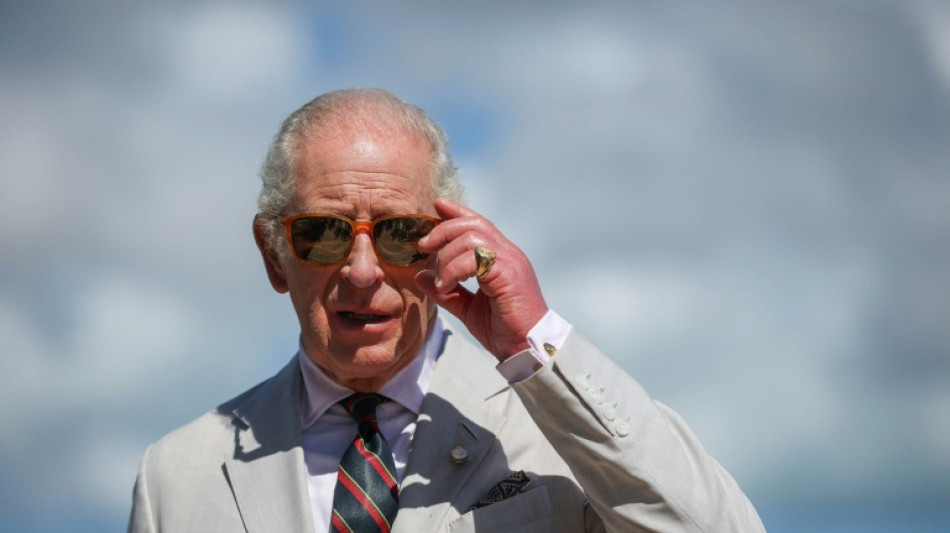
UK king to address Commonwealth with 'unflinching honesty' amid slavery focus / Photo: Isabel Infantes - POOL/AFP

King Charles III will confront "shameful aspects" of UK history with "unflinching honesty" when he addresses Commonwealth leaders next week, Buckingham Palace said Saturday, amid renewed scrutiny of Britain's role in historical transatlantic slavery.
The comments come after Prime Minister Andy Burnham revealed he was open to the UK formally apologising for its role in the trade, but ruling out paying the financial reparations demanded by some Caribbean countries.
The issues have resurfaced as Charles tours the Caribbean before delivering a speech Tuesday at the Commonwealth heads of government meeting there, which Burnham is also set to attend.
"The King will not shy away from confronting the most shameful aspects of the past during this visit," a palace spokesperson said.
"You may therefore expect him to address them in his speech with unflinching honesty, sincere sorrow, and respect for the wider discussions that will be taking place between relevant governments on this issue."
The palace noted the monarch, who arrived in Antigua and Barbuda late Friday ahead of the summit there, will be speaking in his role as head of the 56-member Commonwealth, composed mainly of former British colonies.
"It would not be appropriate for him to address matters of particular policy relating to the UK government's position," the spokesperson said.
They added that the king will "primarily focus on encouraging practical solutions and united efforts to address global challenges and opportunities".
- Slavery pressure -
Under pressure from Commonwealth countries over Britain's pivotal part in transatlantic slavery, Burnham penned a newspaper op-ed published earlier Saturday that argued: "We need to face up to the past."
Writing in The Guardian, he pledged to have "difficult conversations" to safeguard the Commonwealth's future, offering a "structured dialogue with those affected".
"Listening to calls for a formal apology on behalf of the British state will form an important part of this process and I am open to them," Burnham wrote.
Expressing "sorrow and regret for the pain and suffering of so many millions" resulting from the trade and its links to the present day, he insisted reparations were not "the right answer".
"I do not think that British people today can be held liable for historical wrongs, however heinous, that happened in a different age under different laws and in which they played no personal part," he wrote.
The centre-left British leader also announced he would launch a new debt restructuring drive for the poorest Commonwealth countries, led by former Labour prime minister Gordon Brown.
He vowed to work with "global partners" to help those countries repay "over a longer time period and with better rates".
- Reparation calls -
The issues have loomed large over 77-year-old Charles's ongoing nine-day visit to three Caribbean countries.
"I do believe there should be an apology," receptionist Daliesha Murray told AFP as the king arrived Tuesday in The Bahamas, where small groups of protesters waved placards reading: "Pay what you owe us."
The monarch acknowledged "the great suffering of the past" during that stop.
In Guyana on Friday, he visited a site of execution of local people during British colonial rule, pausing to reflect in a gesture seen as indicating his awareness of that past injustice.
Ahead of a meeting with Charles during that leg, Guyana's President Irfaan Ali told ITV News that recognising historical wrongs was just a "first step".
"Now, moving to the apology is the next step," he said.
Britain has never formally apologised for slavery or agreed to pay reparations.
The country profited for centuries from colonialism and slavery, but argues it also led the way in the latter's abolition.
In 1833, the UK parliament passed a law to abolish slavery in most of the British Empire.
She urged the Commonwealth to "look forward" and "not endlessly backwards".
"Slavery was an evil in which people from every continent and region participated," she wrote on X.
"We should be honest about the whole history, not select the parts that are politically convenient today."
N.Diaz--GM