US goes on the offensive in central Asia / Photo: Aris MESSINIS - AFP/File

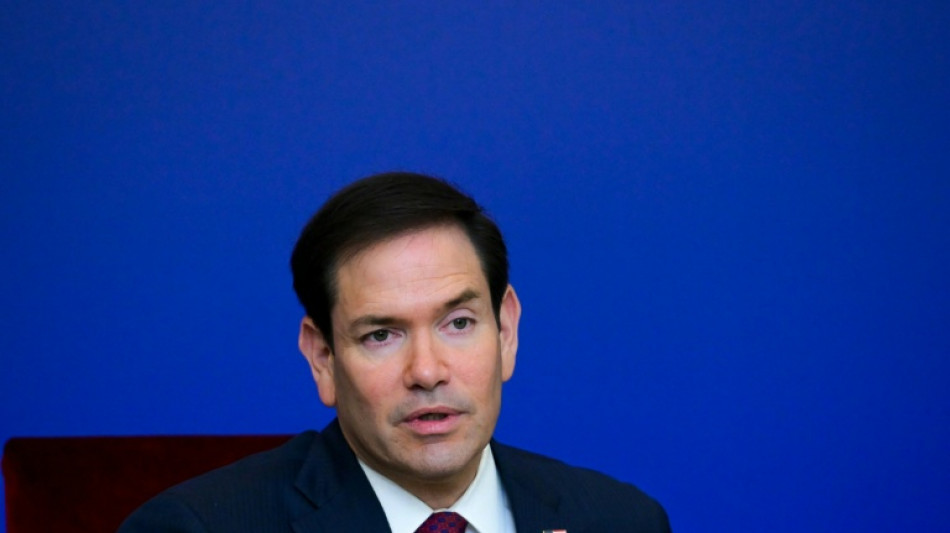
It's dealmaking time: despite the roiling geopolitical tensions embroiling Washington on several fronts, US Secretary of State Marco Rubio heads to Central and South Asia late Saturday to boost commercial ties -- and gain an edge over Russia and China.
With the United States mired in its war with Iran, and the conflict in Ukraine showing no signs of abating, Rubio has stepped up his foreign travel with recent trips to Europe and Latin America, smack in the middle of the US midterm election campaign.
He has largely ceded control of the contentious Iran, Ukraine and Gaza situations to US President Donald Trump's special envoys Steve Witkoff and Jared Kushner.
Rubio will instead lead a massive delegation of 200 business leaders to Uzbekistan, where he will take part on Monday in a ministerial meeting of five Central Asian countries.
A senior State Department official told reporters on Friday that Rubio was demonstrating Washington's goodwill toward the "deepening partnership across Central Asia," especially in the energy sector.
Central Asia is a resource-rich region as vast as the European Union but only boasts a population of about 80 million people.
"We've been planning this for several months, and it's an incredible opportunity to bring the United States into a region of the world that is vitally important," said a second senior US official, on condition of anonymity.
During his visit to the Uzbek city of Samarkand, an emblematic stop on the historic Silk Road, Rubio will participate in a C5+1 meeting with ministers from Kazakhstan, Kyrgyzstan, Tajikistan, Turkmenistan and Uzbekistan.
In November 2025, Trump welcomed the leaders of those countries to the White House.
The former Soviet republics remain linked to Moscow by energy pipelines, as well as security and migratory networks, but Russian influence has eroded since the start of the war in Ukraine -- with China reaping the benefits.
Beijing is the main trade partner of all five Central Asian nations.
Chinese companies have signed a number of energy-related deals, seeking to buy natural gas in Turkmenistan, uranium in Kazakhstan and rare earths in Tajikistan.
The United States also has made sourcing rare earths and improving its energy mix key parts of its foreign policy.
The US ambassador to India, Sergio Gor -- who also serves as the special envoy for Central and South Asia -- has repeatedly emphasized the need for Washington to have better ties across the region.
- Trade deal -
After his visit to Uzbekistan, Rubio will head to India, with stops in Mumbai and Jamnagar in Gujarat state. Both are industrial hubs and major international port cities.
It will be the secretary of state's second official visit to India this year, after a May trip to New Delhi and Kolkata, signifying Washington's push in the region.
"We're very close" to a trade deal with India, the second senior US official said of negotiations that have dragged on for months.
Last February, the two sides reached a provisional agreement aimed at reducing US tariffs on Indian products.
But just a few days later, the US Supreme Court struck down many of Trump's tariffs, which fueled uncertainty about when a bilateral trade deal could take effect.
Ever since, Washington and Delhi have been locked in negotiations.
Relations were rattled when Trump imposed 25 percent tariffs on Indian goods in retaliation for Delhi's purchases of Russian oil, but those duties have since been lifted.
In Mumbai and Jamnagar, Rubio will offer the new US brand of so-called "commercial diplomacy" in his meetings with Indian business leaders.
He will notably raise plans by the Indian conglomerate Reliance Industries to finance a refinery in Texas. Reliance is led by billionaire Indian tycoon Anant Ambani.
E.Calvo--GM