'No place to breathe': life in Indonesia's fire epicentre / Photo: REINA - AFP

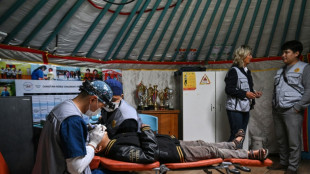
Irvan Maulana has struggled with shortness of breath and a cough as wildfire smoke cloaks the Indonesian city of Palangkaraya. But he is a doctor, and patients keep arriving.
"I've been sick, I've been short of breath, I've had a cough too, but because I must provide care... I just carry on," the 28-year-old told AFP on Thursday at a public clinic.
Palangkaraya in Indonesia's Kalimantan is one of the epicentres of the country's wildfire crisis, which has seen blazes burn through hundreds of thousands of hectares and cause regional air pollution.
For month, Irvan has seen patients arrive suffering the consequences.
"There's been a tendency for an increase in adults and the elderly coming to the general clinic," he said.
"Elderly patients or children, they're more sensitive, so they're more easily affected by coughing, colds, mucus in the nose and throat, and even a sore throat.
Dea Otavia, a 30-year-old security guard, arrived at the clinic with her daughter.
"She says it hurts when she breathes," Dea told AFP.
"It's so suffocating, especially on days like these," she added.
"It reaches inside the house too. There's no place to breathe freely."
Indonesia is afflicted by wildfires regularly during its dry season, but this year the blazes have been turbocharged by a powerful El Nino cycle, which typically brings drought.
Experts say years of deforestation and the drying out of naturally water-logged peatlands for cultivation has also transformed formerly fire-resistant landscapes.
The wildfire haze has drifted into nearby Singapore, Malaysia, East Timor and even the Philippines, prompting periodic school closures and health warnings.
But in Palangkaraya, residents have no choice but to continue trying to get by, said Zikri Yanto, who had brought his baby to the clinic.
"While I'm working, I'm also on alert. Sometimes my wife suddenly calls, saying we need to take the child to the ER."
His four-year-old is sick too, complaining of headaches and general weakness.
"We're extremely anxious, disturbed," said Zikri, urging the government to "pay more attention."
"Here in Palangkaraya City, we should be assisted not only in the form of rice or basic food supplies... there should be safe houses from haze."
"Our hope is that they would be equipped with oxygen, nurses, and everything needed. So, if there are children who fall ill, they can be treated there. That's what we really want."
More than 280,000 people were recorded with respiratory problems between August 18 and October 13, Indonesia's health ministry said Wednesday, though many more are likely to have suffered without seeking treatment.
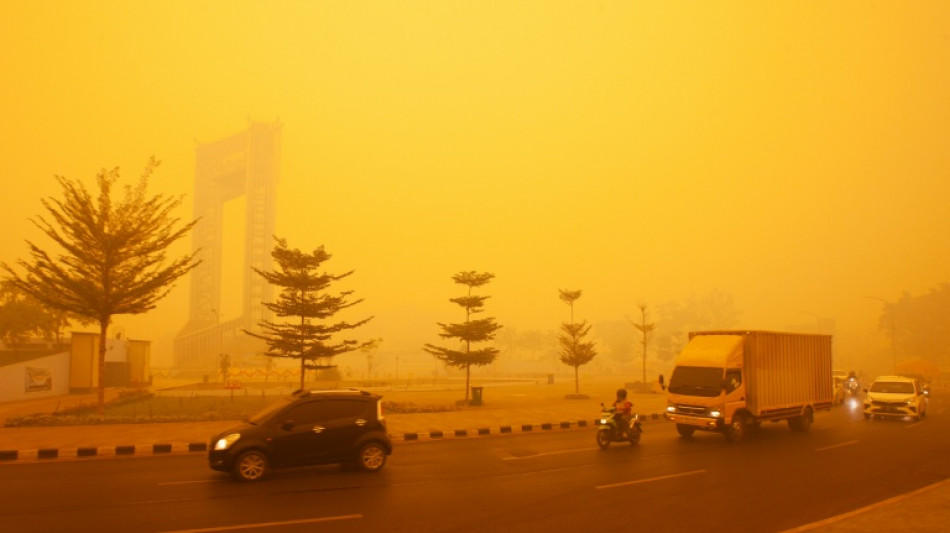
Indonesia's government says tens of thousands of personnel are fighting the fires, but the air in Palangkaraya remains poisonous, with the haze turning the sky apocalyptic orange in the late afternoon.
"I miss seeing the sun," said Dea.
"There's this sense of worry: how long is it going to be like this?"
E.Ortega--GM