The Dice Box Recommends Winter Board Games for Sneinton Market Lounge

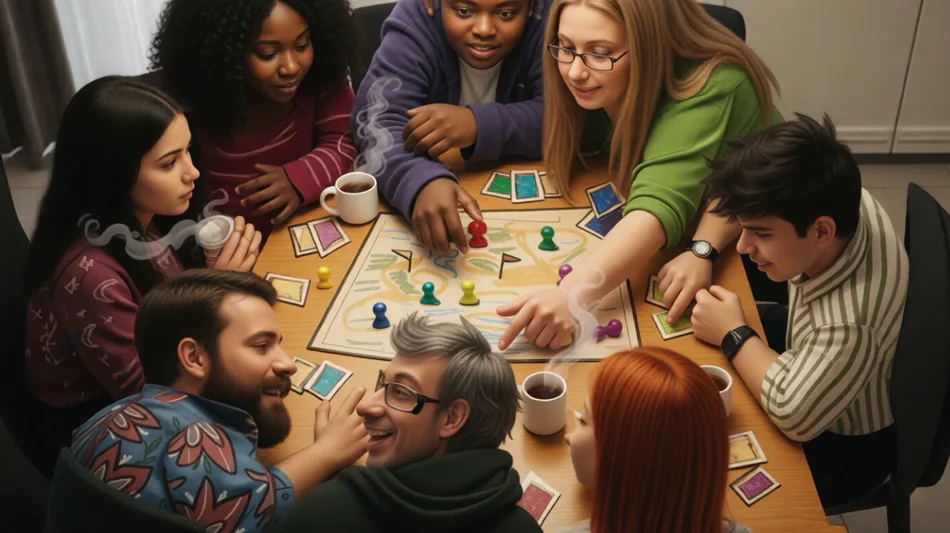
The Dice Box, a board game lounge located in Sneinton Market, Nottingham, has opened its doors to offer patrons a selection of over 700 games. Co-owner David Walden highlights several specific titles ideal for the winter season, ranging from cooperative survival scenarios to aesthetic pattern-building games, encouraging visitors to book tables or attend social drop-in events.
The Dice Box, a board and brick lounge situated within Sneinton Market in Nottingham, has expanded its offerings for the colder months by recommending specific titles to patrons seeking indoor leisure activities. Since opening in May, the venue has established itself as a destination for enthusiasts of tabletop gaming, housing a library of more than 700 distinct games.
The establishment operates as a fully licensed cafe where customers can book tables to play with friends or attend social drop-in events held on Thursdays. The inventory spans a wide spectrum of complexity and style, including competitive strategy games, cooperative team challenges, family-friendly options, and intricate titles suitable for advanced players. In addition to playing, the lounge sells many of its featured games for customers to take home.
David Walden, co-owner of The Dice Box, has curated a list of recommended games specifically suited for winter evenings. His selections emphasize themes of warmth, creativity, and social interaction, designed to provide "cosy" experiences as daylight hours shorten.
Among the top recommendations is Calico, a pattern-building game that Walden describes as both aesthetically pleasing and satisfying. The game involves players creating quilt patterns using specific colors and arrangements to earn points. It incorporates unique thematic elements where color groups reward players with buttons, while pattern groups attract cats to curl up on their designated spots. Walden notes that Calico is versatile enough for solo play or group sessions.
For those seeking faster-paced interaction, Ghost Blitz is highlighted as a party game comparable to Dobble. It tests speed and color recognition, requiring players to match cards to objects on the table. The game includes a complex twist: if no direct match exists in color or form, players must identify an object that contains none of the details shown on the card. Victory is determined by the number of cards retained at the end.
Walden also points to narrative-driven options for groups interested in cooperative play. One such title involves a scenario where players work together to secure fuel and food to survive winter while evading zombie hordes. The game introduces a layer of psychological tension by hiding a traitor within the team, whose secret objective is to thwart the group’s progress. Players lead different factions of survivors with individual goals, ultimately facing a choice between saving the colony or ensuring their own survival.
Another award-winning recommendation is Bärenpark, which asks players to construct their own bear parks. The game involves placing polyominoes on personal boards to build animal houses, waterways, and outdoor areas. Walden notes the inclusive selection of bears, including koalas, as a distinctive feature. Points are scored throughout the expansion process, with final tallies calculated once one player completes their park.
For players interested in nature-themed strategy, Aspens offers a tactile experience involving the growth of a tiny forest. The game utilizes 240 wooden tree blocks that are placed on the board by rolling dice representing the sun and wind. Walden describes it as simple to teach but strategically deep, requiring players to balance future investment with rapid expansion while outwitting opponents.
Competitive fans are directed toward King of Tokyo, a battle game featuring mutants, monsters, and robots. Players roll dice to accumulate victory points, gain energy, restore health, or attack other participants in a bid to become the "King of Tokyo." The game is noted for its broad appeal across age groups and its availability in numerous spin-off variants.
Tenby is recommended for its wholesome atmosphere, drawing inspiration from the Welsh seaside town. Players build colorful streets using cards over several rounds, with scoring depending on the configurations created. The game supports multiple modes, including solo and family play, and includes a QR code-linked soundscape to enhance the coastal theme.
Walden also suggests classic roll-and-move mechanics for chaotic fun. One such game involves four racers with specific powers, such as swapping positions or rerolling scores. Players secretly select one racer before each of four races, navigating the board while dealing with unpredictable outcomes. The title is noted for its psychedelic artwork and playing figures, which appeal to retro cartoon fans.
Creative building is central to Block Party, a game where players construct recognizable objects like tennis rackets or London buses using colored wooden blocks. Guessers must identify the built items, making it a physical evolution of traditional drawing games. The final recommendation, Ice Cool, places players in a school setting where they control penguins trying to steal fish during lunchbreak. The game involves flicking pieces on a board that transforms into a 3D school environment, with a hall monitor mechanic designed to catch the penguins.
The Dice Box is located at Unit 1, Sneinton Market, Nelson Street, Nottingham, NG1 1DR. The venue operates from Tuesday through Saturday until 11 pm, and bookings are advised for table reservations.
H.Perez--GM