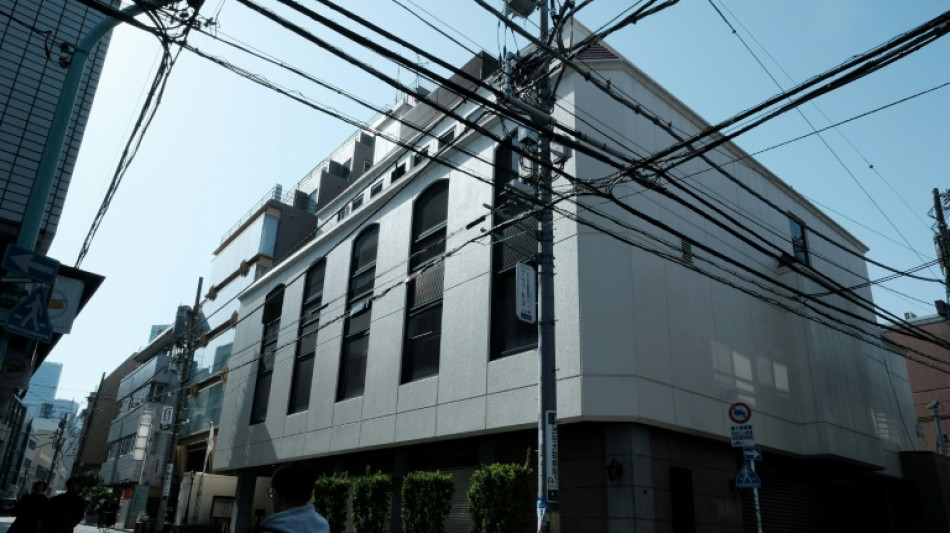
Unification Church loses Japan appeal against dissolution / Photo: Kazuhiro NOGI - AFP/File

The Unification Church lost an appeal Wednesday against a Japanese court's order to dissolve the sect, which came under investigation following the assassination of ex-premier Shinzo Abe.
The Tokyo District Court issued a dissolution order in March last year for the Japanese chapter of the Unification Church, saying it had caused "unprecedented damage" to society.
The Church -- which was founded in South Korea and nicknamed the "Moonies" after its late founder Sun Myung Moon -- is accused of pressuring followers into making life-ruining donations, and blamed for child neglect among its members, although it has denied any wrongdoing.
The Church said in a statement Wednesday that "the Tokyo High Court had issued a ruling upholding the dissolution order against our organisation", calling the decision "unjust".
The court confirmed the decision to AFP.
Former prime minister Abe, Japan's longest-serving leader who had spoken at some of the Church's groups events, was shot dead on the campaign trail in 2022 by a man who resented the sect.
In January, Tetsuya Yamagami was jailed for life for the murder, although his defence team argued that the attack was triggered by his mother's blind donations to the Church that pushed his family into bankruptcy.
The 45-year-old appealed his life sentence last month.
Investigations after Abe's murder revealed close ties between the sect and many conservative ruling-party lawmakers, leading to the resignation of four ministers.
This prompted the government in 2023 to seek permission from the courts to have the group legally disbanded.
The Church lodged an appeal in April. Wednesday's decision means liquidation proceedings will begin and the sect will no longer benefit from tax exemption, although the group can still appeal to the top court.
"Many young people had their lives stolen" because of the sect, Eito Suzuki, a journalist who covered the Church for decades and has been up against them in a series of lawsuits, wrote in a statement on X.
"Having witnessed this harm firsthand... I am relieved that the judiciary has now delivered an appropriate decision," he said.
But Suzuki warned that a probe into the structural issue of political ties had not been carried out.
The Church rose to global prominence in the 1970s and 80s after its foundation in 1954, becoming famous for mass weddings often held in stadiums.
Japan has long been a financial hub for the Church, which told members they must atone for the wartime occupation of Korea and sell expensive items to obtain forgiveness from sins.
Since Abe's murder, the Church has pledged to prevent "excessive" member donations.
Y.Herrera--GM