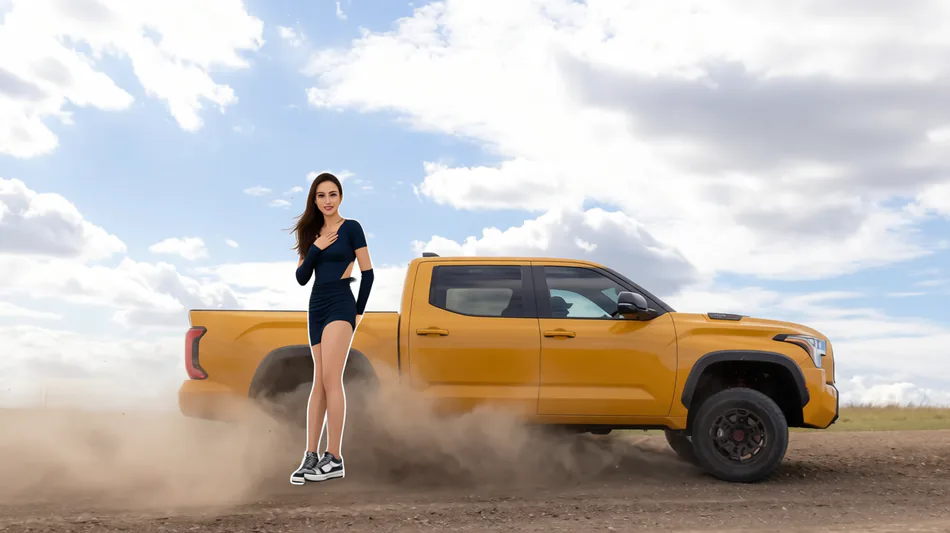
2027 Toyota Tundra Review: New Trailhunter Trim, Suspension Updates, and Hybrid Power

The 2027 Toyota Tundra arrives with meaningful suspension revisions, a new Trailhunter off-road trim, and refined styling that sharpens its appeal in the competitive half-ton market. While prices have crept upward across the lineup, the truck retains its hybrid powertrain options and adds advanced towing tools to challenge established rivals.
Toyota has introduced the 2027 model year for its full-size Tundra pickup truck, bringing a combination of structural updates, new trim levels, and technological enhancements to a segment where it continues to gain market share. The latest iteration features significant suspension changes designed to improve ride quality, subtle exterior styling revisions, and the debut of the Trailhunter off-road package.
The Tundra has established itself as a persistent competitor to the traditional "Detroit Three" automakers since its introduction over two decades ago. Industry estimates suggest that the current generation, which launched for the 2022 model year, is capturing a larger portion of the half-ton pickup market than ever before. Although annual sales figures remain lower than those of Ford’s F-Series, any manufacturer would welcome an additional 15,000 units per year, a volume that likely influences strategic decisions at Toyota’s headquarters.
The 2027 update aims to maintain this momentum through mechanical and aesthetic refinements. Visually, the truck features a new front fascia that replaces the previous design’s deep-dipping bumper area with a cleaner delineation between the grille and the bumper. This change gives the vehicle a more cohesive appearance while retaining its rugged stance.
The trim lineup has been expanded to include the new Trailhunter model. Unlike midsize Tacoma counterparts where off-road trims often sit at the top of the hierarchy, the Tundra’s Trailhunter is built upon the more accessible SR5 base. This positioning allows Toyota to offer a capable off-road vehicle at a lower entry point compared to premium trims like the Capstone or TRD Pro. The standard lineup continues to include volume sellers such as the SR5 and TRD Off-Road, alongside luxury-focused options.
Pricing for the 2027 Tundra has increased across most trims. According to Toyota’s online consumer build-and-price tool, Manufacturer’s Suggested Retail Prices (MSRPs) have risen by approximately $2,000 to $4,000 depending on the configuration. In Canada, four-wheel drive is now standard across the entire range, a move that offsets some of the impact of higher base prices for buyers who previously opted for two-wheel-drive models.
Under the hood, powertrain options remain consistent with recent years, centering on a 3.4-liter twin-turbocharged V6 engine available in both hybrid and non-hybrid configurations. The standard non-hybrid engine produces 389 horsepower and 479 lb-ft of torque in most trims. The base SR trim is rated at 358 horsepower and 406 lb-ft, a reduction attributed to different tuning strategies and dealership incentives aimed at steering customers toward the SR5.
The hybrid powertrain, marketed under the i-Force Max banner, delivers 437 horsepower and 583 lb-ft of torque. This output is tuned for performance rather than fuel efficiency alone. For context, General Motors’ new naturally aspirated 6.6-liter V8 in the Silverado and Sierra produces 481 horsepower and 501 lb-ft, placing the Tundra’s hybrid system in direct competition with traditional large-displacement engines.
For enthusiasts seeking additional power, a new Performance Package is available for the TRD Pro trim. This option adds 32 horsepower, bringing the total output to 469 horsepower. The increase is achieved through a new intake and exhaust system combined with revised engine calibration. Toyota officials have addressed previous concerns regarding powertrain reliability by noting that a new number-one main bearing has been implemented as a rolling production change.
Towing capabilities remain a critical factor for Tundra buyers. When properly equipped, the truck can tow up to approximately 12,000 pounds. Toyota has responded to competitive features like Ford’s Pro Trailer Backup Assist by introducing a similar system for the 2027 model year. This tool allows drivers to steer a trailer in the desired direction using a slider control on the 14.0-inch central touchscreen, eliminating the need for complex steering wheel inputs.
While the screen-based interface lacks the tactile feedback of a physical dial, testing indicates it effectively assists both novice and experienced users in reversing trailers. The system can be overridden at any time by manually gripping the steering wheel. Additional trailer-related features include lane-tracing assistance while hauling and automatic adjustments to safety systems when a trailer is connected.
Toyota also demonstrated a wireless trailer camera capable of mounting on the rear of a trailer and transmitting live video to the truck’s infotainment screen or rearview mirror. Although the system is not yet certified for use in Canada due to antenna regulations, it is expected to become available through dealer parts departments soon. The technology addresses common complaints about video lag found in wired competitor systems.
Interior technology has been standardized across most trims. A 12.3-inch digital gauge cluster and a 14.0-inch center infotainment screen are now standard on SR5 models and above, keeping pace with competitors like Chevrolet, which offers large displays even on base work trucks. A new steering wheel design features spokes that taper from the airbag pad to the rim.
Toyota has also included its Drive Recorder as standard equipment. This system captures 20-second video clips from the truck’s cameras, either manually activated or triggered by events such as hard braking or off-road impacts. The feature provides a record of driving conditions and potential incidents.
The interior space remains spacious, consistent with other four-door crew-cab trucks in the segment. Trim levels dictate the quality of materials, with TRD Pro models featuring industrial-style interiors and Capstone models offering luxury amenities such as illuminated dash nameplates. Toyota has noted that an interactive passenger display is not included, focusing instead on functional design.
The hybrid powertrain now includes a 2,400-watt power inverter located in the truck bed, allowing users to power tools or campsite equipment directly from the vehicle’s battery. Additionally, remote start functionality via the Toyota app will remain active for ten years, a significant improvement over previous three-year limitations.
The new Trailhunter trim represents a strategic entry into the off-road market. Priced at $76,333, it is based on the SR5 and includes 33-inch all-terrain tires, 2.0-inch Old Man Emu dampers, quarter-inch skid plates, and color-selectable Rigid fog lamps. It offers 11.0 inches of ground clearance and a 23-degree approach angle.
However, the standard Michelin LTX Trail tires on the Trailhunter have been criticized for lacking the aggression needed for serious off-roading, especially when compared to the Falken tires on the TRD Pro. Toyota’s choice of an SR5 base helps maintain a reasonable price point, but the tire selection may require immediate aftermarket upgrades for overlanding enthusiasts.
The TRD Pro trim remains the top-tier off-road option, priced at $98,211 before fees. It now includes Quick-Switch adjustable shocks with external reservoirs as standard equipment. The TRD light bar has been relocated from the grille badge to just above the bumper, improving light output and aesthetic integration. A new Performance Package for the TRD Pro adds isometric seats, originally featured in the Tacoma, which do not significantly compromise rear-seat legroom in the Tundra’s CrewMax cabin.
The 2027 Tundra lineup consists of 31 grades, a reduction from the previous year due to the elimination of two-wheel-drive models. Pricing starts at $64,998 for the SR and rises to $103,104 for a TRD Pro with the Performance Package. Hybrid powertrains start at the Limited trim, priced at $83,658.
Despite price increases, the 2027 Tundra retains its core strengths: robust hybrid power, improved towing technology, and a growing list of off-road capabilities. The subtle styling updates and mechanical refinements suggest Toyota is actively responding to market demands, potentially keeping competitors in Detroit attentive as the truck enters dealerships later this year.
V.Vazquez--GM